
Google added multimodal Search reporting. Brands should treat visual discovery as a real search surface.
Google announced a new Search Console filter for web multimodal search, covering discovery paths such as Lens, Circle to Search, image uploads and Chrome image search. The practical implication is not that every brand needs a new visual SEO department. It is that images and the pages around them can now be measured as part of a broader search journey.
Source: Google Search Central, September 24, 2026.
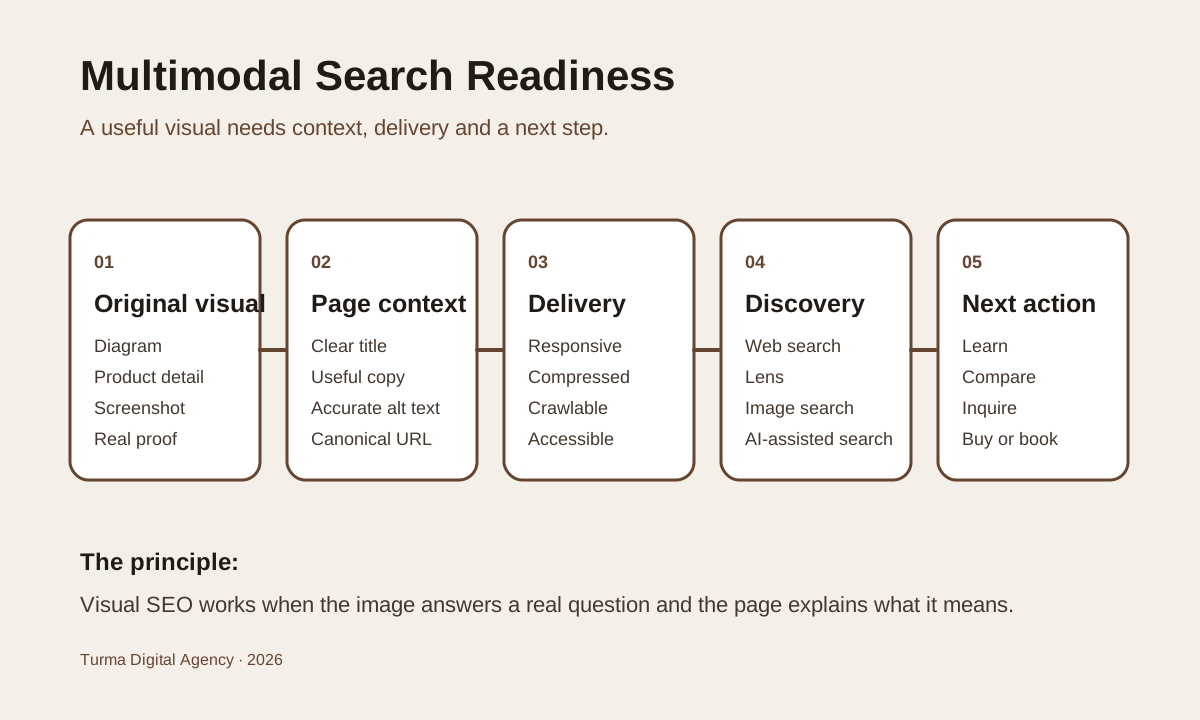
1. Start with images that help somebody decide
Decorative images have limited decision value. Product details, before and after examples where appropriate, diagrams, process visuals, screenshots, comparison images, charts and real environment photos can answer questions that text alone does not. The visual should support the page purpose instead of existing only to fill space.
2. Make the page around the image understandable
An image does not operate in isolation. Use a descriptive page title, useful heading structure, relevant surrounding copy, accurate alt text and a clear canonical URL. If the page is vague, the visual has less context for both people and search systems.
3. Use original visuals when the business has something real to show
Google's current guidance for generative AI features emphasizes useful, non commodity content. Original diagrams, demonstrations, product imagery and first party examples can add value that a generic stock image cannot. The goal is not to manufacture uniqueness. It is to show what the business actually knows, makes, measures or does.
4. Review image accessibility and technical delivery
- Use descriptive file names when practical.
- Write alt text for meaning and accessibility, not keyword stuffing.
- Compress large files so visual content does not damage page experience.
- Keep important images crawlable and avoid hiding them behind broken scripts.
- Use responsive dimensions and modern formats where appropriate.
5. Connect visual discovery to the next step
If somebody arrives because they recognized a product, place, chart or screenshot, the page still has to explain what to do next. The conversion path should match the visual intent: learn, compare, inquire, book, buy or verify.
6. Measure the new search behavior before declaring a trend
The new reporting gives site owners a way to observe multimodal search performance when data exists. That does not mean every site will immediately receive meaningful volume. Use the data to identify which pages and visuals are actually surfacing before making a large production investment.
What this changes for SEO and AI search strategy
Search discovery is becoming less text only, but the foundation remains familiar: useful pages, accessible content, clear entities, strong context, original evidence and a conversion path. For brands, the opportunity is to make visual proof part of the search system instead of treating images as decoration.
Related: SEO services, AI search visibility, and the AI search visibility checklist.